Origins
Six-minute read
Vetiver: the root Haiti gave to the world’s perfumes
A great share of the world’s finest vetiver is grown on Haitian hillsides, and almost none of it comes back under a Haitian name.
Racine Journal
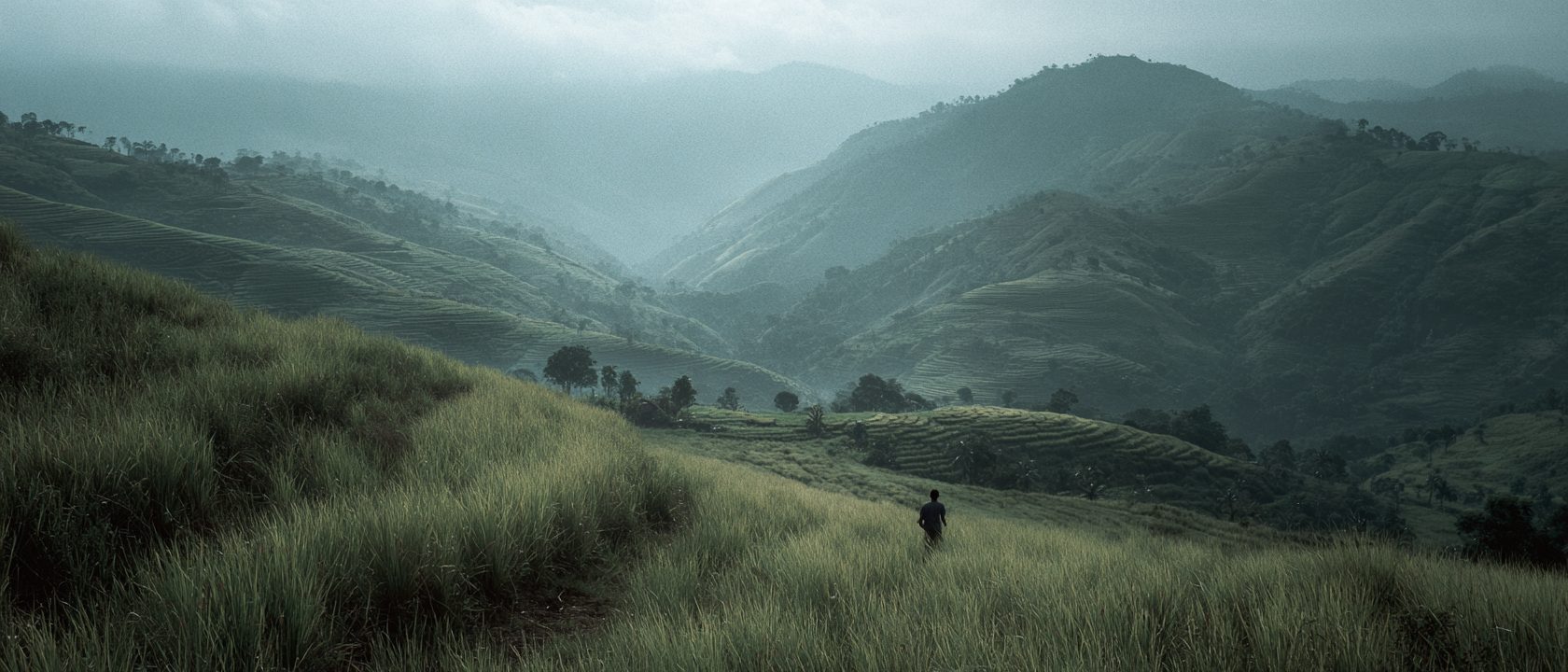
The hills above Les Cayes are cut into terraces so fine they read as contour lines from the road. What grows on them is a grass — unremarkable above ground, and beneath it a root system dense enough to hold a hillside together through a hurricane season.
That root is distilled into an oil the perfume houses of Grasse have relied on for the better part of a century. It fixes a fragrance: it holds the lighter notes in place and keeps them from lifting off the skin within the hour. A great share of the world’s supply is grown here, in the Sud department, by growers who sell by the sack.
What the label leaves out
The oil leaves the country in drums and returns, if it returns at all, inside a bottle bearing a European address. The soil is named nowhere. This is not a scandal; it is simply how the trade has been arranged, and it has been arranged this way long enough to look like the natural order.
Racine begins at the other end of that arrangement. The cleanser is built on vetiver root from these hills, and the hills are named on the label — Vetivè, Les Cayes. The formulation is a small thing. The naming is not.
On the skin
Vetiver reads as earth: dry, faintly smoky, closer to a stone floor after rain than to anything green. In a cleanser it does two things at once — it settles the skin, and it leaves a trace that lasts about as long as it takes to dress.
It suits warm, humid climates, which is to say it suits the place it comes from. That is not a coincidence. Formulations drawn from Haitian ground tend to be formulations that work in Haitian weather.