Places
Seven-minute read
Grand’Anse: cacao groves at the far end of the road
At the western tip of the southern peninsula, cacao grows in the shade of taller trees — and the husk the fermentation leaves behind is not waste.
Racine Journal
The Grand’Anse is where the road runs out. The department sits at the far western end of the southern peninsula, and the last stretch of it is slow enough that the groves feel like a destination rather than a stop.
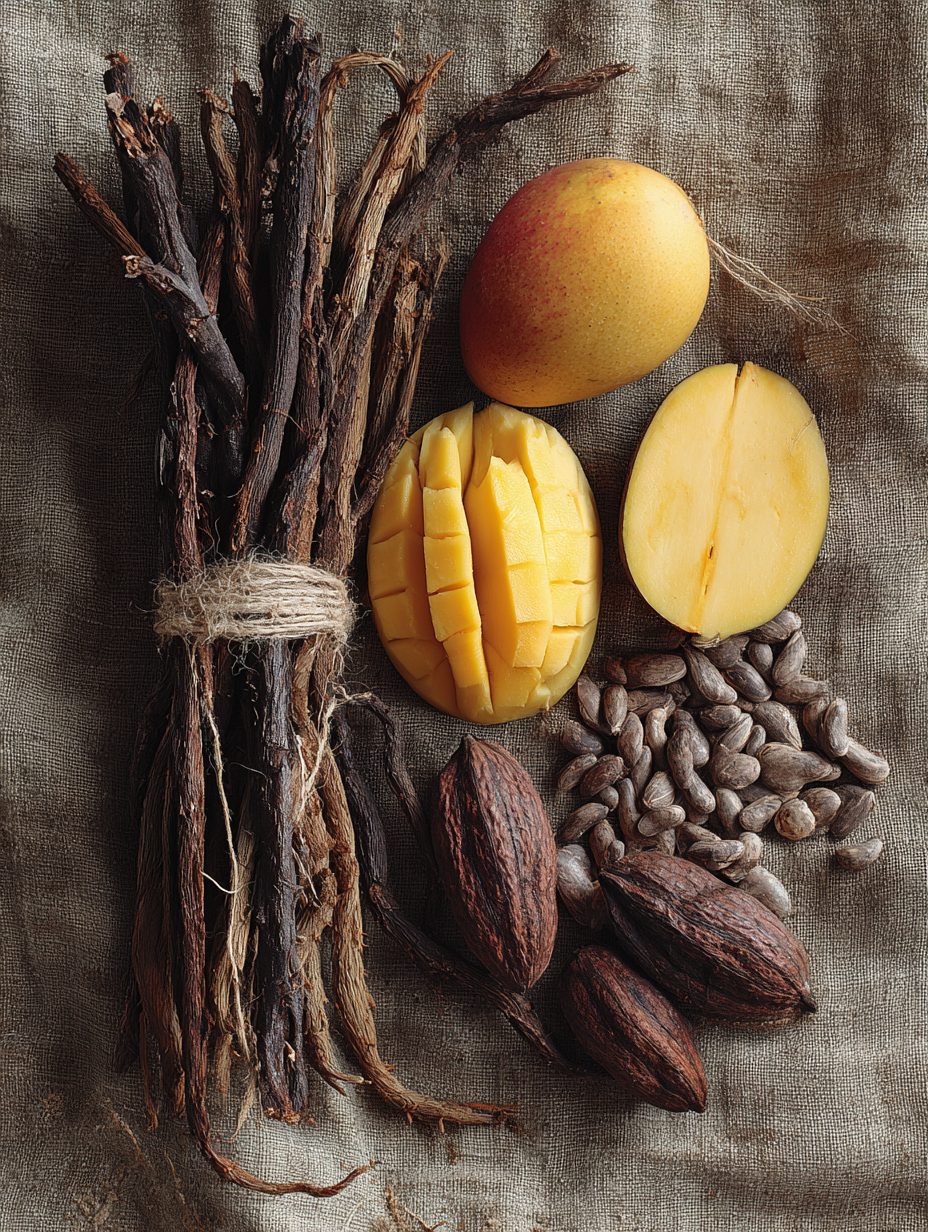
Cacao here is grown under shade, mixed in among taller trees rather than planted in clean rows. Smallholders work plots of a hectare or two. The pods are opened by hand, the beans are fermented in wooden boxes under banana leaf, and what is left at the end of that process is the husk.
The part that was thrown away
The husk is usually discarded, or returned to the ground. Milled fine, it makes an exfoliant with no hard edges — it lifts dullness by friction so mild you have to trust it rather than feel it working, which is the opposite of what most exfoliants are designed to convey.
We use it once or twice a week and no more. Pressure adds nothing. The paste has done its work inside a minute, and the skin that follows takes up a cream more readily than it would have otherwise.
Two harvests from one pod
There is a pattern across all four of our origins, and it becomes obvious once you have seen it. The mango orchards of Gros-Morne give fruit to the table and a kernel to the skin. The cacao groves of the Grand’Anse give beans to the chocolatier and husk to the exfoliant.
Nothing here needed to be invented. It needed to be noticed, formulated properly, and named for the place it came from.